
About Me
My Meez

Recent Entries
Archives
Personal
Interesting Sites
RAINE'S BLUES
GOLD MOUNTAIN
AGAIN
In Stores


Watch mini trailer
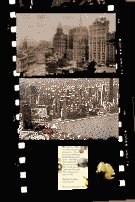
Clip of places featured in Again

Need Flashplayer to view. Give time to load.
TOOL & BAD BOYS
Short, Short Ebooks
|
Tuesday, August 21, 2012

My Anthology GENRES
My author friend Gary Braunbeck just sent me a wonderful blurb for my anthology of short stories, GENRES.
"Sharon Cullars' prose is so graceful you may feel as if you're dancing along with stories themselves. The dance will take you to places so bright you're almost euphoric, and it will take you into corners so dark you'll be shaken to your core. But one thing all of these exquisite stories share is Cullars' ability to mesmerize. I've been an admirer of her work for years. Now it's your turn."
Thanks Gary!
Gary is a wonderful writer of literature that exceeds any categorization. Check out his website at www.garybraunbeck.com.
You can read an excerpt of GENRES at Amazon.Labels: Books, Stories
Read more!
Sharon Cullars Coffee Talk at 8/21/2012 03:30:00 PM
Permanent Link
|
|
Home
---------------oOo---------------
Monday, November 07, 2011
 The Brothers Grimm - A Bella Online Article A few years ago I was the short stories editor at Bella Online. I wrote several articles focusing not only on the technical points of short story writing but also on well-known story authors. I recently remembered one that I wrote on the brothers Grimm after viewing the new NBC show Grimm (which is growing on me as is Once Upon a Time; don't ask me which I like better). Below is the article still featured at Bella Online.
"Once upon a time..." are four of the most often-read words in literature. There aren’t many of us who haven’t heard them as a child, preface to tales of distressed damsels, heroic knights, predatory stepmothers, and stalking wolves that have become part of America’s folklore (thanks mostly to Walt Disney). But these tales were not originally meant for children – at least not before Disney candy-coated them in technicolor features. The origins of most of these stories have roots in darker folklore, folklore that was diligently collected by two brothers in the 19th century.
When Jacob and Wilhelm Grimm set about gathering the mostly Germanic narratives, they did so to preserve the oral history being threatened by a Napoleonic invasion that had set about suppressing the local culture. The brothers were in search of something that would unify the German people under this oppression and were indefatigable in their research. Often they would invite storytellers to their home, and the brothers would write down the tales. Interestingly, many of the storytellers were young women from middle-class families who had heard the stories from governesses and servants.
The narratives relayed were barely disguised morality tales and often had undertones of sex and violence to illustrate the downfall of the wicked and immoral. To make them more palatable for the middle-class gentry, the brothers substantially re-wrote and edited most of the stories, but some element of violence remained. Through various translations, punishments meted out to fairy tale villains were softpedalled because of the barbarity of the originals. For example, in the original "Snow White," the evil stepmother is forced to dance in red-hot iron shoes until she falls dead. An early version of "Little Red Riding Hood" had both the girl and her grandmother eaten by the wolf. In some subsequent versions, the wolf even offered Little Red parts of her grandmother to eat. The Grimms provided alternative endings to these tales, with the evil stepmother falling off a mountain instead and a resourceful grandmother finding an escape for herself and her granddaughter. Actually, “Little Red Riding Hood” was lifted and conflated from a French version written in the 17th century by Charles Perrault.
Even though the brothers’ original intent was to be patriotic folklorists, they eventually compiled these stories into a collection of 210 fairy tales and entitled it Children’s and Household Tales, published in 1812. Many of these stories are familiar the world over: "Cinderella," "Hansel and Grethel," "The Six Swans," "Rumpelstiltskin," as well as many more. Despite the title, the original collection was not aimed at children, and the brothers even refused to illustrate it. Also, the book was not well received by many parents and clerypersons who considered the content too raw and uncivilized. Eventually, the book found a steadily growing audience and today, nearly two hundred years later, the collection and its various versions are best sellers worldwide; the only other book that outsells this opus is The Bible. Maybe its sustained popularity is due to the fact that it remains a source of imaginative and effective cautionary tales for young children.
So the next time you sit down to read a bedtime story to your little one, you might ponder two brothers who thought to preserve one culture and ended up changing the literature of children throughout the world.Labels: Stories
Read more!
Sharon Cullars Coffee Talk at 11/07/2011 06:32:00 PM
Permanent Link
|
|
Home
---------------oOo---------------
Friday, December 17, 2010
 Anticipating Christmas Extremely budgeted and haven't even shopped yet. Busy writing legal articles to make rent and am contemplating another book project. In the meantime, dragging an oft-blogged Christmas tale out, dusting off the snowbunnies. Maybe one day I'll write another holiday tale, but it won't be this year.
A Chocolate Christmas Tale Transference. That’s what Dr. Llewellyn would label my act. A garbage truck splashes slushy water onto my fur coat incurring what is bound to be a hefty cleaning bill, and a few steps later I give the finger to a Santa ringing a bell for donations. The Santa, a grizzled black man with rheumy eyes, promptly replies with his own garbled, "Back at ya ..." as I keep stepping, determined to get past the mass of bodies hoarding the sidewalks on their Christmas shopping treks. A moment later, a little girl, about six or seven, gleefully walks toward me swinging her American Girl bag and manages to catch me a healthy blow on the shin. I blink, but say nothing. It’s not nice to give the finger to a child. Especially in front of her mother, who has several pounds on me. It’s a quarter to four on a Friday, one week before Christmas and I haven’t even begun to get that warm, fuzzy feeling that seems plastered on everyone else’s face. Either they’re faking it, or I am in the midst of a Bedford Fall nightmare with dreams of Potterville roaming through my head. ‘Tis the Season’ is emblazoned in holly next to an oversized bottle of Cognac on a large bill board. I nod up at it wistfully, agreeing with the premise. Imbibing is a necessity this holiday. It takes the edge off the stress of pulling together a meal for twelve, gifts for thirty, getting my long neglected living and dining rooms in decent enough shape to serve said meal without incurring the down-the-nose look from Aunt Rose, who is bound to notice the sherry stain in the carpeting (left over from my much-needed Thanksgiving imbibing that barely managed to get me through that particular holiday). Somehow, I always seem to be selected hostess (my sister, Brenda, says it's because my Hyde Park home is larger and nicer). Dr. Llewellyn says I need to understand that assertiveness and the word "No" are not bad things. Maybe, next holiday, his words will overcome my thirty-year conditioning to be over-accommodating. The shopping bags in my hand are pulling at my over-used shoulder tendons and the inappropriate, but stylish Manolo Blahnik boots are kicking the hell out of my corns. But I diligently march on, determined to get the last two gifts on my list: a new Gameboy for Jathan, who broke his last one in a missile-throwing fight with his sister, Jericha; and for Jericha, a new Black Barbie, a replacement for the one who mysteriously lost her locks one night not too long after Jathan inadvertently destroyed his Gameboy. I feel that I’m rewarding bad behavior, but my sister’s kids are dear to me. I plan to talk to Brenda about getting a few sessions with Dr. Llewellyn for Jathan. One can never learn anger management too soon. Might save money on a defense attorney later. Water Tower Place in Chicago is always jammed, but the seasonal influx from the surrounding suburbs seems more like an invasion of the Stepford folks, all wholesome and sunny even on a day descending into the single digits. And no manners whatsoever. They walk three, four, even more to a line expecting you to skirt around them because somehow you, a single, childless woman, are obliged to give deference to the sacred family. Whatever. I travel up in one of the octagonal glass elevators that look out onto every floor of the mall. Christmas lights, holly wreaths and bells overwhelm me. I swear I can smell mistletoe even in the crowded elevator. At least there are no piped-in carols sending subliminal impulses to make me overspend. I’m already in debt as of three purchases ago. Somewhere on the way to the sixth floor I remember that the only toy store in the place closed its doors months ago. I curse quietly, but not quietly enough. I hear a small intake of breath. A rosy-cheeked, red-haired moppet is gaping up at me with her mouth in an "O", then turns to her mother and says, "Mommy, that lady said the "F" word." Her mother pulls her little one closer, throws me a look, and says, “Just ignore the bad lady, sweetie." The other denizens also cut me a look, recognizing Scrooge in their merry midst. An older lady shifts in the opposite direction. I’ve been designated a carrier of the "Humbug" plague, probably contagious. No one is taking any chances and I am given as wide a berth as possible in an elevator populated with several bodies. The doors open up on the sixth floor and I escape my judgment. Immediately, I smell the pungent decadence of rich, deep chocolate. A Godiva boutique window is framed with the requisite Christmas regalia, its offerings wrapped in gold or silver tinsel paper. Open gift boxes of chocolate-trimmed biscotti’s, fudge and truffles at this moment provide the only real meaning to this world. Logic and reason are within their depths and I enter the tabernacle, an adherent seeking the wisdom passed down through the ages since the first cocoa bean was distilled. A couple of women are already at the counter, lasciviously looking over the selections, while an eager saleswoman prattles on through a menu of chocolate delights. I go to another counter, where a plate of chocolate-covered strawberries beckons. I set down my bags, unglove and pick up one of the offerings, pop it into my mouth, refusing to think of open plates and traveling germs. The experience is just too good to be distracted with worries about unwashed hands. "Delicious isn’t it?" a smoky voice interrupts my reverie. I open my eyes (yes, I had closed my eyes to focus on nothing but the succulent mélange of chocolate and tart strawberry) and look into the face of a freckled beige woman, her face beaming knowingly. I nod. "We have several select boxes. Our one pound box is only $11.95, the two pounder $23.90. Oh … wait a minute, here’s something that is equally divine." The saleswoman pulls a gold and red tinseled box from beneath the counter, opens it up. "Praline almonds," she announces. "Take one." I delicately pick one, bite into it. There is something about the feel of nuts crunching between your teeth, the light flavor of almond surrounded by the taste of deep chocolate that pushes away the momentary worries. I swallow hard and long, eager to remember this flavor, hoping it can get me through the rest of the afternoon, which promises to be demanding. "Then there’s the hazelnut chocolate praline," she tempts further. I’ve only tasted hazelnut a few times in my life, and I’m not sure that I remember the flavor. As soon as I bite down though, I recall that first occasion. My Aunt Rose’s Cocoa Hazelnut Cake that she’s long since stopped making. Served with lemonade on her porch in the Rogers Park home where she still lives. Arthritis of the hand has made it hard for her to sift and stir, so now she only offers store-bought confections. But that summer when I tasted her cake that first time was also the summer of my first car and unfortunately, my first accident. That summer was when my mother’s cancer went into its final remission, and no sooner than we celebrate this miracle, my father is killed crossing a downtown street a month later. The taste of hazelnut is bittersweet in my reflection. I shake my head. "Don’t really like this one." The woman purses her lips, contemplating my answer, then quickly pulls out another box. "Here, try the pecan croquant," she offers, holding the box forward. "It’s a mix of pecan and crisp, milk and dark chocolate. It’s one of my personal favorites." No bad memories with this one. It doesn’t disappoint, and I smile. I receive an answering smile from the saleswoman. "I often tell my customers that an ounce of chocolate can surmount a pound of sorrow," she says, putting the boxes back beneath the counter. "Well, that may be an exaggeration, but it does a soul good sometime to just stop and taste, to lay down their worries a bit. Don’t you think?" I crunch through another blissful morsel and make my decision, no matter that the unplanned purchase is going to chip into my tight Christmas shopping budget. "I’ll take the two pounder of all of them except the hazelnut," I say. Then I think about it. "You know, just…just add the hazelnut, too." I decide then that I do like the flavor, and that since my mother is still here and since I may never taste Aunt Rose’s delicious cake again, I’ll try to remember the good of the flavor, let the pain stay in the past. "Do you want these wrapped?" she asks as she rings up my purchases. I shake my head; these are gifts for me alone, selflessness be damned. "Good. You have to treat yourself sometimes. ‘Cause if we don’t appreciate ourselves, who will, huh?" Dr. Llewellyn would probably say the same thing. We all need to be good to ourselves. Which means not letting people walk over you. At that moment, I determine that next Christmas, the family is definitely spending it somewhere other than my house. Maybe at Brenda’s, who tends to weasel out of these things. I’m tired of being taken for granted. I need to be appreciated. So, without guilt or buyer’s remorse, I grab the bag of chocolates being handed to me with that ever-present smile. Tonight, instead of liquor, I’ll load up on chocolate to take the edge off. I’ll settle by the fire, a plate in my hand, maybe even a Christmas carol playing on the CD player. Each night I’ll give myself a chocolate fix, and who knows, by Christmas, maybe I’ll be ready to face whatever looms. For now, though, I’m beginning to get that warm, fuzzy feeling. That Bedford Falls feeling. As I start for the door, the saleswoman calls me back. She’s holding a small gold colored gift bag. I take it; inside is a box. "It’s a chocolate truffle for the road. On the house." Her eyes tells me that she understands some things that maybe I don’t. "Thank you so much," and I mean it. "Merry Christmas," she calls out as I leave. I turn and wish her the same. And, strangely enough, I mean that, too. Later, walking down the same street I walked earlier, I encounter the graying Santa still ringing his bell, asking for donations. I start to pass him by, my face averted, hoping he won’t remember me. But then I stop in my tracks, remembering the saleswoman’s graciousness, how she made me forget my bah humbug blues for awhile. I pull my wallet from my purse, retrieve a $20, stuff it into the can. Santa sees the bill, smiles with what turns out to be some very nice teeth. His eyes don’t seem so rheumy anymore. "Merry Christmas, and God bless you," he says graciously. I walk on, smiling. The $20 is going to be sorely missed when I finally hit the toy stores. But I’ll just have to make do. Transference. That’s what Dr. Llewellyn would call what I just did. And he’d be right. Labels: Christmas, Stories
Read more!
Sharon Cullars Coffee Talk at 12/17/2010 05:43:00 PM
Permanent Link
|
|
Home
---------------oOo---------------
Friday, October 02, 2009
Here's a short story I wrote several years ago. I wanted to write something with an island flavor to it and set this in Madagascar.
 Three Cries of the Hammerkop Certain tribes believed that in the same way they can see their reflections mirrored in still water, a hammerkop bird can see reflections of the future, and knows who is shortly going to die. When the bird sees the image of a person with death overshadowing him, it will fly to the home of the doomed, and utter its three warning cries. The hammerkop will watch for the falling star which prophesies death, as it falls above the area of the dwelling in which someone is about to die. When it sees this star, it will fly over the abode venting its mournful cries. AFRICAN MYTH
Little Rana listened to the hammerkop fluttering outside her window, then watched listlessly as the bird landed on the sill and gave three raucous cries. "I know," she said, her breath small gasps. "I know." She did not need the bird to tell her she was dying. She felt the heaviness of her chest, the heat from her small body searing into the matting of her bed. Her fever would soon kill her. "Mangetaheta aho." (I am thirsty). The water pitcher sat on the bedside table, but she was too weak to reach it. Alongside the pitcher sat a plate of koba, the pate of peanuts, rice and bananas that was her favorite. It had been sitting there all morning and was probably stale. Her stomach would not welcome it now anyway. She had hardly eaten in two days and her stomach seemed not to remember food nor that it needed it. Death was waiting for her, biding its time like a shadow man in the corner of her room. And outside the tin-covered cottage she shared with her mother and sisters, life continued. The sounds of the Antsirabean village crept through her window, comforting and tormenting her at the same time. She so longed to be with her friends, running along the savannas, trying to catch the funny looking indri or stopping to smell one of the many orchids or baobab that bloomed in the rainforests. Right now, Tana's mother would be cooking a pot of Akoho sy voanio, just as she does everyday when the sun is at its highest above the Ankaratra mountains. Rana could taste the chicken and rice simmered in coconut milk on her tongue, remembering the sweet flavor of the carefree life of a ten-year-old girl living amidst the beauty of Madagascar. "Mandehana!" (Go away!), an angry woman's voice yelled just outside. That was Lona, her neighbor, probably yelling at Radama, who always snuck into Lona's yard trying to steal beans from her garden. He had never been successful given the small fact that he was always getting caught. "Go away, before I tell your mother, ya little cur!" Rana smiled as she heard Radama's laughter. Rana knew that part of the thrill for Radama was luring Lona outside so that he could see her womanly figure silhouetted through her light cotton dress. Lona still hadn't realized that Radama only came around on very sunny days. The hammerkop came again, again giving its three cries on her sill. "Mandehana!" Rana said as strongly as she could, almost mimicking Lona. "The star is not yet here!" She sat up and dared it to speak again. The bird flew away. The effort robbed her momentarily of breath and she lay back down exhausted. There was another sound at the window. "Manao ahoana." Radama peeked his head through her window, his teeth white against his cocoa-colored skin. "Who were you screaming at?" Rana looked at the boy, jealous of the health that bloomed so radiantly from him, the strength of the young and undying. He would be here tomorrow to play, as well as the tomorrow after that, and the one after that. "Nothing. Just a bird," she answered him. "Did it cry three times?" "Yes," she said sadly. "Then it is true what they say, that you are dying?" Rana did not answer her playmate immediately. "Vizako aho" ("I'm tired). Go away, Rad." But the boy did not move, just stood there watching her curiously. "Aiza your maman?" he asked. "At market, getting vegetables for me to eat to make me stronger." "That won't do it. You need magick, that is the only way," he said with the worldly wisdom of a child who had gained the secrets of the earth in his ten years. "You should go to the waters and bathe. People have been healed there." "Maman does not believe. She says no one has ever been healed in the waters." Radama shook his head incredulously. "But that is foolish! Of course people have been healed! Look at Gotrand, the old man who lives near the market. Remember, he had the cough and was all the time spitting up blood? Everyone thought he would die, and even the bird said so. Then one night, his sons carried him to the waters and the next day it was as though he never had the coughing. Rana, has no one even tried to take you to the waters?" Rana shook her head solemnly against the pillow. From the front of the hut came sounds of pans clanging. Her sister, Sohandra, was preparing the noon-day meal. Radama was quiet for a moment, contemplating something private. "I could take you," he finally said. Rana looked at her playmate suspiciously. She had often been the target of Radama's cruel jokes and wondered whether this would be the cruelest. Her mother had warned her against false hopes. But looking into his eyes, which were so sure, she wanted to believe that she didn't have to die. Not today. Not ever. "I have no strength hardly to walk." He looked over his shoulders, then back with a conspiratorial smile. "Not to worry. I will get us a pousse-pousse." Rana rose up a little. "But how…" "Didn't I say not to worry," he smiled. "I know a way. I'll be back by sundown." "Maman will be back before then…." "You have such little faith, Rana…I shall not let you die. I promise." He said this last as though all power rested with him. Despite what her mother had forewarned, Rana began to believe that maybe there was hope. After all, Gotrand was walking around today, his strength twofold that of many younger men. Radama winked at her, his face jovial again. Then hearing Sohandra coming into the room, he ducked away quickly. "Here you go," her sister said, carrying a tray with three bowls on top. Sohandra looked over at the uneaten kobe on the table as she placed the new tray down on the edge. "Oohh, you've hardly eaten your breakfast. Rana, you must eat or you will…" Sohandra stopped, leaving the rest of the words unspoken. The sisters glanced at each other, then Sohandra turned away, afraid that tears would come. "Here, I have gathered your favorite fruit and nuts, and here is a bowl of Vary Amin Anana. I hope it is good." Sohandra moved the uneaten morning repast to a nearby chair, then handed Rana the bowl of fruit. Rana sunk her teeth into a pear, studying her sister as she did so. Her sister's mocha beauty often turned many of the village men's heads and stirred their hearts and loins. At seventeen, she was already promised to a farmer in the neighboring village of Fianarantsoa. He was old, almost 35, but he was also wealthy with sheep and parcels of land. As was custom, he would present a bride price which would repay their mother for her loss. But there would be no bride price for Rana, she thought sadly. The pear suddenly did not taste good anymore. Death seemed to be reaching closer. She could only hope that Rad could help her. Sohandra upended the bowl of rice into the bowl of Vary Ami Anana. The mixture of steamed mustard greens, spinach, and tomatoes sautéed with the juice of roasted beef smelled wonderful, but Rana's stomach lurched at the thought of trying to force it down. As Sohandra bent closer to serve her, Rana could smell the scent of vanilla intermingling with the other aromas. Sohandra always smelt of vanilla, of freshly baked bread, of hyacinth. Good smells, comforting smells. Rana reached out to touch Sohandra's unbound hair, and brought it closer to her nose to sniff. In times before, Sohandra might have slapped her younger sister's hand away, but this time she let Rana run fingers through it. The dying girl seemed to be trying to form a memory, to take it with her when she went to join their razana, the ancestors. There, she would become fanahy, those fortunate to stand next to the creator and gather wisdom. The thought should have comforted Sohandra, but she could not bear to think about losing her little sister. Rana let go of her sister's hair and laid down exhausted, the tiny flicker of hunger that she had momentarily felt dissipated with her strength. "Won't you eat a little more?" Sohandra pleaded, but Rana weakly shook her head. It was fady to talk about death. Even Radama's careless mention of the word "dying" was taboo and might still bring punishment down on them both. So Rana could not speak on it, could not talk to Sohandra about how she felt about all that was happening to her. Rana could not bring herself to tell of the coldness that fear sometimes brought, the fear that was a servant to its master, Death, preparing the way for the taker of life. And Sohandra would not speak of the breaking of her heart, of how she would miss the days when the two of them had gathered flowers together to give to their mother, or when they went down to the river bank to wash their clothes and lay them to dry in the sun. She could not fathom that they would never eat lichee nuts together or braid each others hair or laugh at the indri fleeing through the trees. "Maman will be coming back soon. She's bringing carrots and leek onions for soup. By then, you're sure to be hungry. And you know how delicious Maman's soup is. You will eat and gain your strength." Tears ran down Sohandra's face. "The razana cannot take you; you belong here!" she cried softly, then fled from the room. Rana tried not to hear the sobs coming from the other part of the house. ***Radama was true to his word. Around sundown, after her mother had sat with her and forced her to eat some soup and then left her to sleep, a creaking sound outside her window woke her from her restless nap. Radama peeked his head through the window, the ever present smile on his face. "I told you not to worry. I am here. And I have a pousse-pousse waiting outside to carry you to the springs." Rana shook her head feebly. "I cannot. I do not have the strength any longer. Just let me go." "No!" Rana had never heard him speak so harshly. Even at his angriest, there was always a lilt underneath, his playfulness never far from the surface. But not now. "Why should you care, Rad? You don't even like me." "I do too like you!" he protested. "Which is why I'm going to take you right now to the healing waters. Then you shall grow up and grow beautiful…and then one day you will be my wife." If she could have laughed, she would have, but even the thought of laughing sapped her strength. There was no way she would ever marry the boy who toted trouble with him where ever he walked. Right now, he eased through her open window, stealthily moving so not to disturb her maman and sister. She was surprised at how easily Rad lifted her off the bed. He carried her gingerly to the window, then deftly maneuvered her out. And as he said, the small rickshaw stood waiting, although it was missing a wheel and leaned to one side. He had made sure to take one that no one would even care to miss. He lowered her into the seat, then positioned himself in front of the vehicle and took up the poles. He managed to balance the rickshaw to keep the side with the missing wheel from scraping the ground. The moon was high over the mountains as he pulled her over the rutted road, and the smell of spices from the now-closed market tinged the night air. It was cool, and she shivered since Rad had forgotten to bring her blanket. Most of the villagers were inside their homes, eating their evening meals. A few men were gathered around the meeting hut where inside the owner served strong brew distilled from sugar canes. One of the men spotted Radama and waved. "Manao ahoana, Radama. Where are you off to?" The words were slurred. "I am going to the loharanos. "Whaa, the springs? So far and at night? Boy, you need to get home 'fore your Maman comes looking for you." "She already knows," Radama said easily. Rana heard the lie and thought that Rad did not lie very well. Yet, the man said nothing else as Radama pulled her along. She wondered whether the man in his drunk even saw her. The night got cooler as they entered the rainforest and she shivered with ague and fever. No one knew exactly what was wrong with her. The village doctor said that she had sickness of the lung and had given her medicines but they had not worked. And there was no money to take her to the big hospital in Antananarivo. Her maman sold flowers and spices at the mart to the tourists, but only made enough to buy seeds for their garden, a goat to milk, and cloth for dresses. This had been enough before her father left. Before she became sick. It would take a month's worth of money just to bury her in the christened graveyard along with a marker to let the world know that there had once been a girl named Ranavalona Mokae. In the distance, they heard lemurs moving through the trees. A breeze caused the tree fronds to whisper, and Rana thought she heard the voices of the ancestors beckoning her in the wind. She felt ready to go to them. A burst of leaves startled them as a bird flew from its branches; it cried three times. They traveled for miles. She knew that by now her mother would have checked her room, found her gone. But they did not hear the cries of the villagers searching for them – not yet. Now she could smell the sulphur from the hot springs. Saw the lights in the distance from the hotels where the tourists stayed who came to see the famous waters. They came to play in the water, to buy the precious gems formed in the caverns, to look at the pretty homes lining the large avenues where the rich lived. The tourists did not care to see the poor, to see the tin huts where they lived, to see the people who served them, who sold them their trinkets. "We are here," Radama said at last as he stopped the pousse-pousse as close to the water as safety allowed. He walked to where she sat. "I have to place you in the water so you can be healed. It should make you feel good." He lifted her from the rickshaw and carried her the few steps to the springs. He walked her into the water, all the time holding her as the waters closed over them up to their necks. Immediately, the heat of the springs began to take the chill away, to seep into her skin, her bones. Death seemed to take a few steps back. Maybe, to tease her this one last time. The waters began to swell around them. Radama held her tightly. In the moonlight, his face was unsure, as though he was not certain what was happening. "Rad," she said without the breathlessness that had bothered her for weeks. "I'm scared." "It is OK. I won't let anything happen to you, Rana. Just hold still and let the waters go through you." But even as he spoke, the current became a fast moving eddy surrounding them, pulling at them, as though it wanted to swallow them whole. "Please, I want to go Rad. The water will kill us." "No, it will not. You'll see. You will be whole again. I promise." He held her tightly as she struggled against his grasp. The water rose past their chins up to their noses. It rushed into her nostrils and filled her lungs. She was drowning! She fought like a gazelle, already dead between the devouring teeth of a tiger. But she needed to breathe one last time. She had to! Suddenly, the water pushed out of her lungs into her throat and she began to cough violently. Water and blood poured from her mouth. She gagged as the torrent spewed back into the spring. She knew she was dying now. There was so much blood. Then mercifully it was over. The water calmed and slowly went back down. She took a breath…a really deep breath. No longer was there that heavy band that had constricted her chest. Now the air felt crisp and clean as it moved easily in and out of her lungs. And she could move without the tiredness that had sapped her strength, making her feel old. The fever that had consumed her was gone. "Rad…I…I am healed." And she knew it was true . They pulled themselves out of the spring. She didn't need his help. "Thank you, thank you so much Radama. I am going to live. The hammerkop was wrong." She hugged him, then moved away embarrassed. The boy smiled shyly, and reached over to kiss her cheek. "So you will marry me one day?" he asked. She smiled. "We shall see. You have to give my maman a good bride price." "Even better than this," he countered. "Yes. I am not cheap. Sohandra's man is giving Maman many chickens and another goat. Plus jewels, also." Then she remembered. "Maman! I must tell Maman! And Sohandra! They will be so happy! Let's go home!" Rana gladly walked the trek back to their village as Radama pulled the empty rickshaw. It had been months since she felt this strong. Her legs were as sturdy as they had once been. The night was no longer threatening, but a comfort, as it had witnessed the miracle of her healing, and the shelter of its cloak had made it all possible. She laughed at the moon in the sky, knowing that there would be more moons to come. No birds flew above, but even if there had been, she would have just laughed anyway. A star burst, then fell from the sky. When they arrived back at the village, the dawn was just emerging over the mountains. The morning air was crisp, but no longer cold. The day would be warm, welcoming. Already along the way, the merchants were setting up their wares under the white umbrellas. Soon the tourists would be straddling in on their pousse-pousses, looking for things to buy. She knew Maman would be too worried now to be heading to market, sure that something would have happened to her. But once Maman saw her walking, saw her standing and talking and laughing… Both children approached her hut carefully, not sure what to expect. But no one was standing in the doorway. All was quiet. Maybe Maman had gone to their neighbors in search of her. They entered, and she heard her Maman sobbing from her room. She walked to her room, ready to comfort her worried mother, to tell her everything was all right now…then stopped in the doorway. On her bed, where hours before she had lain dying, Sohandra now lay still, her beauty frozen in death. Rana's heart stopped. Maman sat in the chair next to the bed, her body shaking with sobs. Some of the neighbor women stood around the bed, Lona among them. "Maman" Rana whispered. "What happened…." Her mother turned, tears streaming down her face. "Rana, where were you?! We looked everywhere when we found you gone. We went to the neighbors, not knowing where you could go…." Rana pointed, her shock making her reborn body stiff. She felt Radama's hand on her shoulders. "How…" "We looked for you in the night. Sohandra was walking towards the trees…I told her that you couldn't have walked that far, but she was desperate to find you. A bird cried and startled her. She fell and hit her head on a rock. She got up…and seemed all right except for a small gash on her head. She walked back to the house and went straight for your room…and then the bird cried through the window…three times…and then she fell onto the bed…and did not move again. Never again." Rana could see the gash now, the dried blood that marred the smoothness of her sister's skin. She walked slowly, as though in a trance, pushing past the neighbor women, who were also crying. Sohandra, beautiful Sohandra, seemed even more beautiful now. Rana touched her sister's face. It was cool. Tears flowed from her own eyes as she realized too late that every blessing comes with a price. Outside, a bird cried three times, then cried no more. Labels: Stories
Read more!
Sharon Cullars Coffee Talk at 10/02/2009 09:13:00 PM
Permanent Link
|
|
Home
---------------oOo---------------
Friday, August 07, 2009
 Revisiting a past avatar - Valeria Sergius I'm a citizen of neglected standing over at Ancient Worlds where I had assumed a character called Valeria Sergius, a black woman of Napata (capital city of ancient Cush) captured and brought to Rome by Antonius Sergius, a Roman general who invaded her country. Although initially Valeria was made Antonius' concubine, she quickly gained his heart and he freed her, after which they became common law husband and wife. After his death, she became an esteemed merchant of herbs and a renown apothecary. With this backdrop in mind, I began to write in my journal a sort of soap opera storyline where Valeria began to be wooed by the young heir of a patrician family. I never finished the story, as that was around the time when I had to have minor surgery (actually fibroid embolization to relieve me of pain) and I basically abandoned my role at Ancient World, which included editing the newsletter there. Recently I went back to my domus (house) there and began reading the few entries I wrote and found that the wasn't half bad or cringe-worthy. I began writing these entries before I started AGAIN. I actually did some research on Roman holidays and daily life to provide a more accurate backdrop. Hmmm, maybe I'll take up where I left off, but how to explain away the passage of six years in the life of my character? Anyway, the journal's link is below, with the last passage at the top and the beginning entry at the bottom, so it should be read from botttom to top. Also below is another link to Valeria's backstory in Napata, when she was named Anum. Valeria's JournalValeria's Song - Chapter ILabels: Stories
Read more!
Sharon Cullars Coffee Talk at 8/07/2009 12:23:00 AM
Permanent Link
|
|
Home
---------------oOo---------------
Tuesday, January 27, 2009
And yet another story Labels: Stories
Read more!
Sharon Cullars Coffee Talk at 1/27/2009 06:54:00 PM
Permanent Link
|
|
Home
---------------oOo---------------
 Another unearthed story - "Laila" Found another story, also nearly 10 years old. Actually, I received an award for this one at a long-defunct site called Speckled Words. Like many of my stories, there's a paranormal slant to it.
A structured havoc is how Laila often referred to her garden. A deliberate mess of yellow creeping jennies, red peonies, and pink dogroses intersperced with tall grass, the garden gave the impression of wildness, but within restrained, invisible boundaries. She liked it like that, the undomesticated order, the lack of tight control. Off to the corner of the house stood a large poplar tree, its branches maned with sturdy green leaves, its shade reaching to shadow the growing buds of her garden. She aimed the nozzle in her hand at the group of dogroses and sprayed the pesticide evenly, deliberately. Aphids and other pests had been at the garden leaves, evidenced by the rough-hewn holes borne throughout the green mass and she was resolute in her goal to kill off the little cretins before they killed off her flowers. As she set about wreaking destruction, she hummed to the strains of Stan Getz’s Morning of the Carnival coming from inside her wired screen door, her hips moving slightly in rhythm to the bossa nova beat as she continued to spray.
"Good morning, Laila, how you doing this morning?" a bass tenor merged with the sound of a tenor horn coming from the radio. Laila turned to find Mr. Raymond eyeing her over the gate that separated their yards, a mawkish smile showing his appreciation for her form fitting jeans, and the taut stomach exposed by her halter top. She put on her no-nonsense face.
"Fine, just tending to my garden," she said in an unencouraging monotone. What she really wanted to say was "Just tending to my business, like you should be doing..." but she didn’t, not seeing the benefit in souring an already irritating neighbor relationship. Mr. Raymond, although nearing 70 and with an ailing wife locked away somewhere in the house, nevertheless believed he had a few good oats in his sack and was constanty attempting to sow them in the direction of any breathing female over 16 and under 60. As she was nearing her mid-thirties, she, unfortunately, fell within his preferred age range.
"See you got a little bounce ta you today," he said as he rested an arm on the fence, his posture seeking to invade her space, her yard.
"Look here, Mr. Raymond, I don't have time to talk right now. I got to finish with my garden and get outta this heat."
Mr. Raymond looked up at the sun as though only now realizing it was up there, then turned his smile back on her. "TV man says its gonna hit upwards to 90 today. Gonna be hot. See ya dressed for the weather though."
Laila stopped her spraying and gave him a much harder look this time, her eyes unblinking, her forehead furrowed. The look was the one she reserved for the rowdier students in her high school English class. "Don't think all this heat is good for someone your age, Mr. Raymond. Might be too much for your heart." Something in her voice indicated she hoped this would be the case.
But Mr. Raymond just shook his head and smiled. "This ole heart has stood more heat that this here. Sun's been kinder to me than most though."
Laila wasn't sure what he meant, nor did she want an elaboration. The plants were sufficiently doused; it was time to go in. She started for the door, yet Mr. Raymond was rambling on about something.
"...can remember the time when I was jes a boy pickin' cotton down in Miss'ippi...sun usta beat down on me so hard, almost turned my skin black. Always felt like I was in the meaner part of hell. Hands would be bleedin' from separatin' the cotton from the boll. Had little stickers like tiny claws 'long the outside of the boll that would stab your fingers, make them bleed. But ya better not bleed on the cotton 'cause you couldn't sell cotton wit' blood on it."
Laila didn't understand why she was standing there listening. Maybe because Mr. Raymond's eyes were no longer on her, but were looking off into the distance, his mind on his reminisce, not on her behind. She hadn't known he picked cotton as a child; as a matter of fact, she knew nothing more about him than that he seemed to be a caretaker for his ailing wife and that he was the type of old man admonitions warned you about.
He looked younger now; with his wrinkles relaxed she could see a little of the young man he must have looked like. She could see that he had been handsome once. And she also realized that it must be hard to lose your looks, your youth and know that most of your life was behind you. Still that wasn't an excuse to act like an ass most of the time.
Something made him turn toward his bedroom window overlooking the garden. Laila suspected it was his wife, peeking out, checking on her errant husband. She felt empathy for the sick woman, trapped in the house while her husband tried to make a play for a much younger woman. Men could be dogs sometimes.
After a few seconds, he turned back to her. His stance was no longer loose, his body almost stiffened erect. His eyes seemed regretful.
"Ever wished for somethin' so hard, ya jes knew that God had to give it to ya otherwise there was no reason for existin'?" he asked suddenly, his eyes pinning her where she stood.
He paused, waiting for her to answer. She didn't know what to say. She never believed in wishing. Hoping was more reasonable, but she had never appealed to any being to bring about circumstances that weren't within her control. She generally rolled with the waves that crested in her life, feeling thankful to no one in particular when she came out only slightly scathed, maybe somewhat ahead or not that far behind.
"I don't make wishes; they're a waste of time," she answered with finality, turning to go. His voice stopped her again.
"Ah, but there be wishes that can come true. I once made a wish and now wish that I hadn’t."
Why was she still standing here? Why weren't her feet moving toward her door, providing her escape from his trip down memory lane? And yet, her ear tilted toward him in an anticipation she couldn't explain. Her curiosity was piqued about this man who always looked as though he had secrets to tell, who now displayed a dignity that was often too well hidden by his usual mask of foolery.
He was staring at her strangely. "I wished for a long life that weren't comin' to me. I put off death, met it face to face and wished to God that I had power o'er that demon. And right when it woulda carried me off, God gave me that power. Thang is, the only one I could save was myself, not those around me.
Laila frowned, feeling more uncomfortable than before the beginning of this strange conversation. Actually, the conversation had turned the corner from strange to pathetically weird and yet Laila told herself that it was understandable for an old man to delude himself into believing that he had some sort of power against death when death was closing in on him. Pathetic as the old man was, though, she wasn’t about to stand here and help him entertain the delusion.
"Mr. Raymond, I have to go in now," and for the second time she started for the door. But he kept on talking, and again she could not help but pause to listen.
"I see death sometimes hovering, like a hawk in the sky waitin' to swoop down on a poor titmouse. It's got its eye on you, Laila. You're that poor titmouse. Wished it weren't so, seeing as you have so much more livin' to do. But can't help ya now."
Laila stood there for a few seconds, shocked, not sure she had heard him correctly. But when she looked at the gravity in his face, she burst out laughing. The timbre of the laugh was derisive, mocking. Who did this old man think he was, God? No one had the prescience to know when someone was going to die. She had let this fool waste enough of her time.
This time as she continued the previously interrupted trek to her back door, she ignored his pleas as he called out to her. She let her back door slam shut, punctuating her contempt.
******
Mr. Raymond stood there, looking a few seconds at the closed door. At least he had had time to warn her; the others hadn't even been given that. He turned to his bedroom window to see a pair of golden eyes glaring out at him, malevolence making them gleam through the glass. It was still in the shape of the female that everyone knew as his wife.
In the end, he knew the blame rested with him. He shoulda been more careful and not let it (or rather, her) see him flirting again. Or he shoulda been quicker telling Laila all that needed telling. Not that she woulda believed him anyhow. What sane person would believe you if you told 'em that you had given over your body and soul to the demon known as Death over a hundred years ago, that she had promised to spare your life as long as you stayed with her, kept her happy. That the power you had over it was no different than that held by a man over a lovesick woman.
In the end, she was no different than any other female; she wanted fidelity. He had often failed on this count and had risked his immortality too many times with his wandering eye. Yet she never took it out on him. He could never convince her that he meant nothing by the smiling, the winking, the looking. But this time, he shoulda been more careful. He truly liked Laila.
He heard the sound of thrashing wings and turned just in time to see the demon-turned-hawk, golden eyes blazing, fly out of his window aiming toward one of Laila's opened windows. And he thought regretfully as he turned resignedly toward his own back door that nothing was more hellish than a female demon scorned.
Labels: Stories
Read more!
Sharon Cullars Coffee Talk at 1/27/2009 05:32:00 PM
Permanent Link
|
|
Home
---------------oOo---------------
 An old story - "She" I unearthed this story via the Wayback Machine imprint of my old website. Nearly forgot about it as I wrote it nearly 10 years ago. Since it isn't as "winceable" as some of my other old stories, I am reposting it here, flaws and all. The original backdrop music was some haunting melody by Enya. Can't remember it now.
The night was cool and calm, the blue waters crystal with merging shadows and light. Two sister moons guided her onward to their destination. The man and woman sailed on.
"How far?" he asked, his voice echoing in the shelter of the surrounding mountains. Although distant, the purplish blue ice-capped peaks drew sound into them, absorbed it into their many caverns and ravines, then sent it back to the travelers trebly in repetition. The sound of his fear was also trebled.
"It isn't much farther," she answered. Again the echoes. "You don't have anything to fear."
She looked at him, saw the wariness in his face as he looked around at the unfamiliar setting. He was a stranger here. She must be patient with him.
"How long have you lived here?" His eyes looked up at her, a beacon of humanity in this otherwise strange night, in this strange but beautiful place. She was beautiful, also, this woman with skin of midnight velvet, smooth and dark, with upturned breasts bared to the glory of the moons. A cloth in brilliant colors was wrapped cozily around her well-rounded hips. She stood tall and lithe, moving the boat forward with a push of the pole in her hand. Her dark eyes were all but invisible in the night.
He had lain naked and alone, lost and disoriented on the banks of the waters. It had been night then as it was now. Although he tried, he couldn't remember how he had gotten there. And when he pressed his mind for memories of who he was and how he had come to these shores, it refused him the story, telling him to trust in the here, in the place, in the woman.
She'd told him her name was Kyana. As for his own, he decided that right now it wasn't important. Especially as he could not remember it. Maybe this strange woman knew. Maybe she also knew why he was here. Maybe she would tell him before their journey ended, before they arrived at wherever she was taking him.
"I have always been here," she finally said. "Can't remember there ever being a time when I wasn't sailing these waters, bringing travelers to and fro."
"Where do your travelers come from?" He was interested in her story, since he didn't have one of his own to tell.
She smiled and shrugged. "Oh, all over and nowhere, from places I have only dreamed about."
He liked the sound of her voice. It sang to him of the mountains around them, of the waters they sailed on.
"I wish I could remember where I came from," he said softly to himself, looking down at the waters. His reflection in them was as pale as his skin. The blond of his hair shone almost white.
"You do not remember because you choose not to."
He shook his head in protest. "No, I don't remember anything, nothing at all, not who I am, how I got here. The only thing I remember is waking up on the banks of the waters and seeing you sailing towards me."
She was silent again. He didn't like her silence. It seemed to condemn him. Her face looked toward another bank of mountains, their towering peaks disappearing into the sky.
"Where are we going?" This was not the first time he had asked her, but she had never answered him.
"We are going home."
"Home? Whose home, yours? Because I certainly don't live here. I've never been to this place before in my life." He was certain of this, even though he couldn't have said why.
"Thought you said you didn't remember anything." Laughter was in her voice, but she didn't turn to him, her eyes remaining on the course ahead.
"I don't remember," he said like a petulant child. "And I don't know why you're trying to make me think that I do."
She sighed. Sometimes her travelers truly did not remember their pasts. But she knew that he was not one of those people. Ah well. She wasn't going to argue with him. He would remember soon enough.
"I'm not trying to make you do anything. I'm just a river woman, taking another traveler across, that is all. Whether you choose to remember or not is none of my concern. As soon as we enter the tunnel through the mountain over yonder, we will be home. And you can go where you please." A calm complacency had taken the place of the laughter in her voice.
Home, he thought bitterly. Where was home? Surely not this place. He looked up at the twin orbs in the sky. An image of a single moon hung in the back of his mind somewhere. Along with a woman's voice. A voice edged with something he didn't want to remember. But in the silence of the night, he heard her calling him back.
"Jerry, please...don't leave me. I'm sorry."
He heard his own voice then, impatient, pitying. "It's over, Lorraine. Can't you understand that? I don't love you anymore. I want to be free."
He heard the soothing, flowing sound of a moving river, smelled the pungent earth around it. Her sobs had filled the night as they sat along the bank. He had brought her to that quiet place, hoping to talk with her, to reason with her, to soften the blow. But she had turned from him. And when finally she turned to face him again, a loud sound had exploded in his ears. He remembered the blazing pain searing through his chest, and the life flowing from him through his blood. As he left his body, he thought he heard Lorraine's voice still beckoning him not to go.
"I'm dead, aren't I?" Surprisingly, the fear left him now as he accepted what he must have already known.
"Depends on how you define death." She sounded pleased with him again. "Some people would say death is when the body loses the soul. But they'd be wrong. The soul is never lost. It simply goes on until it finds its way home."
"Are you dead then, too?" he asked.
She shook her head. We are not the dead ones. We are the ones who have just moved on. This here is not a land of shadows. The true shadowland is what you have just left behind. Shadows walking around thinking they're real when they are really nothing more than spectres, ghosts." She shook her head in pity at the thought.
"This place here, this is real. This is where life begins. And just ahead of us lies our only true home."
After that, she did not speak again for the remainder of their journey through the mountain tunnel. He contemplated what she had told him, and what was being revealed to him by his memories. They all came flooding back now: the hectic pace of his life; the pressure of living up to an image imposed on him by others; the long, tedious hours at a job that had slowly but completely strangled his freedom, much as his relationship with Lorraine had begun to suffocate his life. He had tired of the arguing, followed by the painful silences between them. Had he ever really loved her? He didn't think so.
He felt sad then, realizing that he had died without truly knowing love, without truly knowing that there was someone to share his life's journey with him.
Just then, they passed inside the tunnel and darkness surrounded them. He wished suddenly for the moons and their brilliant, comforting light. Was it always night here, he wondered.
He saw a pinpoint of light near the end of the passage. The light grew larger as they neared it. Soon it reached out to them and pulled them into its embrace, welcoming them. Finally, they were on the other side.
Everywhere he looked, bright colors beckoned - the greenest pastures and trees, the bluest lakes, all of it stretching for miles and miles. The sun blazed golden and warm. Castles dotted verdant hills. Off the shore, people walked along smooth pavements of ivory. They were as naked as he, but did not seem to care.
She helped him out of the boat and set him ashore. Her hands were soft, yet strong
and comforting. He noticed a soft fragrance coming from her, a pleasing mixture of fresh tilled earth after a light spring rain, and summer flowers welcoming a new day. Her smell brought back halcyon memories of childhood summers spent at his
grandparents' home. Why hadn't he noticed it before?
"Is this heaven?" he asked, looking around curiously. Oddly, she shook her head.
"No, this is not heaven. This is simply Eden. A place lost to those who decided to live in shadows, who opened their eyes, refusing the light, eagerly accepting the darkness. Eden didn't go away. They did."
She got back in the boat after settling him on shore, and he realized suddenly that she was going away. For some reason, the thought of her going away disturbed him. She had made the journey less frightening.
"Are you coming back?" he asked. She caught the hope in his voice and smiled. He could see her eyes now, eyes as lovely as amber, as warm as the sun above.
"I'll be back," she said, the laughter in her voice again. Then she pushed the pole to manuever the boat around. He stared at her as she began moving away, wondering when he was going to see her again. Wondering why it made him happy to think of it. She looked over her shoulders only once at him as she entered the tunnel.
Then she disappeared, this woman named Kyana, this gentle escort of souls into paradise, this most beautiful death he had ever seen. Yes, he hoped to see her again really soon.
Labels: Stories
Read more!
Sharon Cullars Coffee Talk at 1/27/2009 04:44:00 PM
Permanent Link
|
|
Home
---------------oOo---------------
Thursday, November 13, 2008
 Audio Clip - Neil Gaiman's "Murder Mysteries" I first heard the audio version of Neil Gaiman's short story "Murder Mysteries" while hanging out at one of my favorite Second Life haunts, called aptly enough The Haunting Hour (which has since moved to a large island and been rechristened October Country), where one can listen to old radio shows as well as audio renditions of contemporary stories like "Murder Mysteries." I've liked Gaiman since first reading his novel Neverwhere and so was eager to hear this audio rendition of another of his stories. I quickly became mesmerized by the tale of the first murder - no, not the one between Cain and Abel, but an even earlier crime - the pre-creation murder of a seraphim that occurred in the city of angels before man or the earth was ever formed. This is a tale of two murders, actually - and the reminisce of an angel named Raguel, christened the angel of vengeance by a pre-fallen Lucifer himself. Raguel's prescribed duty is to suss out the murderer among the angels. Eventually Raguel finds the guilty party and brings down a most vengeful retribution upon the angel, a retribution so extreme that it ultimately kills Lucifer's fealty to God. Eons later in present day L.A., a now earthbound Raguel wanders a park in the pre-dawn hours and encounters an Englishman sitting on a bench. The Englishman, in town to visit a former girlfriend, is also the narrator, and it is from his perspective that we hear Raguel's recount of the seraphim murder, which is also a tale of a love gone wrong. Of course, the narrator believes the grizzled, weary man is delusional, but the story is entertaining, so he sits and listens and soon becomes mesmerized. Until, he is forced to face his own horrendous secret and realizes that the old man is more than he supposed. And he soon discovers that the angel of vengeance is still on the watch for those deserving of punishment. The stellar audio cast includes Brian Dennehy as Raguel, Michael Emerson ( Lost) as the Narrator (BTW, Emerson's wife, Carrie Preston, plays the flame-haired waitress, Arlene, on HBO's True Blood), and Thom Christopher as Lucifer. Other cast members are Evan Pappas as the flamboyent first angel Phanuel and Christopher Burns as the tragically lovelorn Seraquel. Below is an excerpt clip (Windows MP3). You can read the full story in Gaiman's anthology Smoke and Mirrors.  - MP3 Labels: Stories
Read more!
Sharon Cullars Coffee Talk at 11/13/2008 08:42:00 PM
Permanent Link
|
|
Home
---------------oOo---------------
|
|